
The Pannonian Lakes Complex and the tourist offer of Tuzla (history, present and future)
Tuzla is a city that has firmly decided to position tourism as one of the main levers of the city’s further development, through concrete projects that have changed the image of the mining and energy center of our country into an important tourist destination in just a few years.
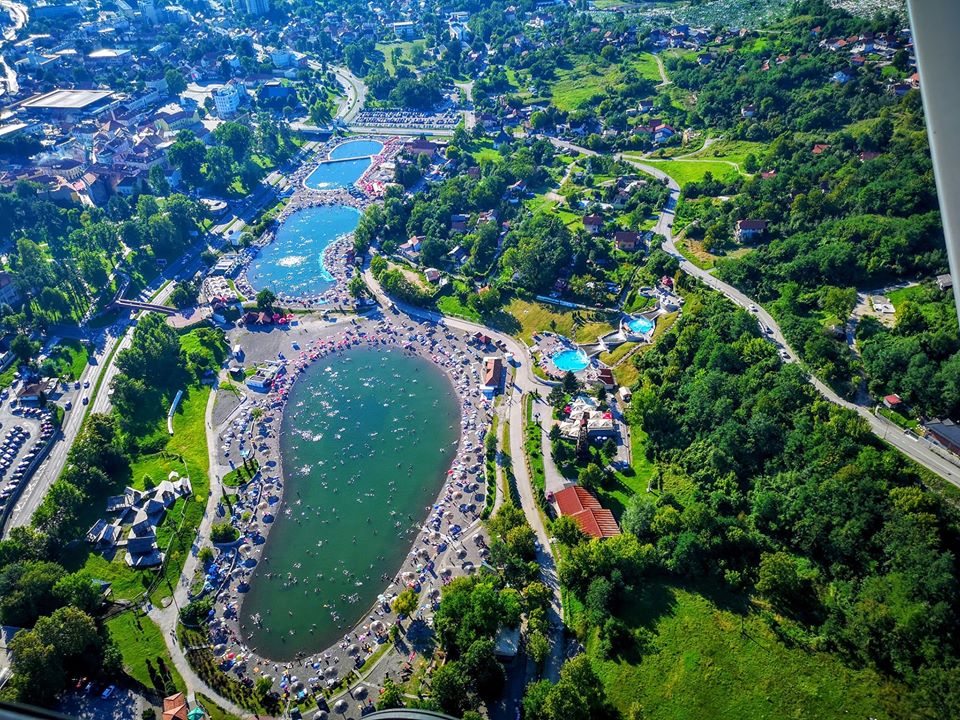
The story of the beginnings of significant tourism development in our city began in 2003 after the construction of the first phase of the Pannonian Lakes complex, although the roots of tourism in the city of Tuzla date back to 1914, when the first spa Slana Banja was built, known in Europe for treating various rheumatic diseases. Salt, as a natural resource whose exploitation has been destroying the city center for years, has been used as an advantage for the further successful development of the city, thanks to the city administration led by the Mayor of Tuzla, Mr. Jasmin Imamović. The location of the Pannonian Lakes complex once housed a part of the old city center, which over time, due to uncontrolled salt exploitation and intense subsidence, was transformed into an undeveloped depressed wetland area without any content or purpose. For the purpose of urbanization and development of this large area in the city center, the city administration came up with the idea of using the natural resource in the immediate vicinity of the complex – salt water, with the aim of building a water reservoir in the form of a salt lake with the healing properties of water to function as a city open-air swimming pool. In this way, the combination of natural resources, human ideas and human hands created the Pannonian Lakes complex as a superior ecological project, unique in Southeast Europe, a project that will serve the well-being of all citizens of the city of Tuzla, our region and our country. The main initiator of the idea and realization of the construction of the Pannonian Lakes complex is the City of Tuzla, as 80% owner of the complex, which declared this area a Public Good for general use, and entrusted the management of all segments of the complex’s work (recreation and sports, catering, marketing, care for the health and safety of guests, implementation of projects for various events, etc.) to the company Public Enterprise “Pannonica” doo Tuzla.
After the implementation of the first phase of the complex’s development with the construction of the large (first) lake in July 2003, the phased development continued in 2006 with the construction of the Archaeological Park – the Neolithic settlement of Sojenica with a museum exhibition that speaks of the continuity of life in the area of the city of Tuzla since the Neolithic era. At the beginning of the summer season in 2008, the capacities of the complex were significantly increased with the construction of a second salt lake, and at the end of September another unique tourist product was created – Salt Waterfalls in the form of an outdoor inhalation health center, unique for these areas. The third Pannonian Lake was opened on September 1, 2012 with a capacity of 2,500 guests, which increases the daily capacity of the entire complex to 15,000 guests.
The Pannonian Lakes complex, as the only salt lakes in Europe , with its tourist activity (attractiveness, clean water and environment, good and cheap service, location, large number of visitors) had a decisive influence on the decision to award the Municipality of Tuzla (2nd place) in the selection for the best tourist city in Bosnia and Herzegovina – the Golden Rose for 2006, as well as the Golden Catering Crown award (conceptual design of the Archaeological Park-Neolithic Sojenica Settlement-Pannonian Lake) in the category of special nurturing of relations towards traditional cultural and historical values of Bosnia and Herzegovina. Then, the recognition from the Directorate for the selection of the best managers of Bosnia and Herzegovina, Southeastern and Central Europe in the field of tourism for the Best Manager to Director Majid Porobić and for JKP Pannonica doo for the Best Company, presented in 2012. And as a crowning achievement in 2012, the city of Tuzla and the salt lakes were the winners of the second prize 2012 UNWTO ULYSSES AWARD, the highest award of the United Nations World Tourism Organization for innovations in public policies and management, for the project “Valorization of Natural Heritage – Pannonian Salt Lakes in Tuzla” , which is awarded for innovations in the field of tourism. In 2013, the city of TUZLA and the Pannonian Lakes were the winners of the International Tourism Award GOLDEN INTERSTAS 2013 for an exceptional contribution to the development of tourism in the city of Tuzla and a significant contribution to the development of tourism in BiH as a whole. For a great contribution to the development of tourism in the Tuzla Canton in 2018, the Public Company “Pannonica” doo Tuzla was the winner of the special awards ” Tourism Star 2018″ (Chamber of Commerce/Economics of the Federation of BiH), as well as ” Tourism Star TK” and ” Salt Crystal 2018″ (Tourist Association of BiH and RTV Slon). For a significant contribution to the development of tourism in the Tuzla Canton in 2025, JP Pannonica doo Tuzla was awarded ” Tourist Star of TK 2025″ and “Tourist Destination of the Year” by the TK Tourist Board.
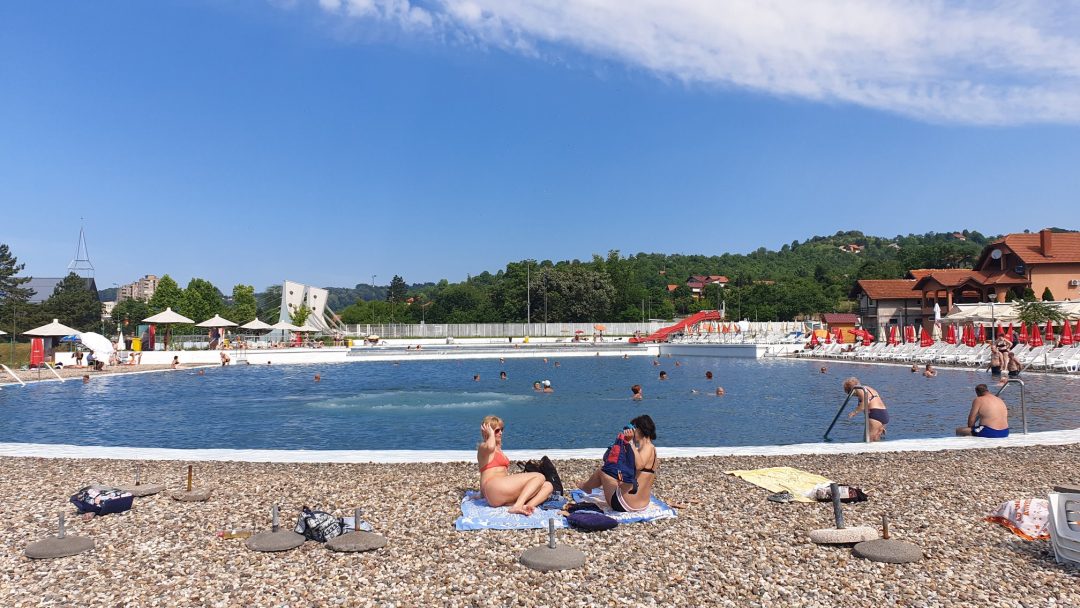
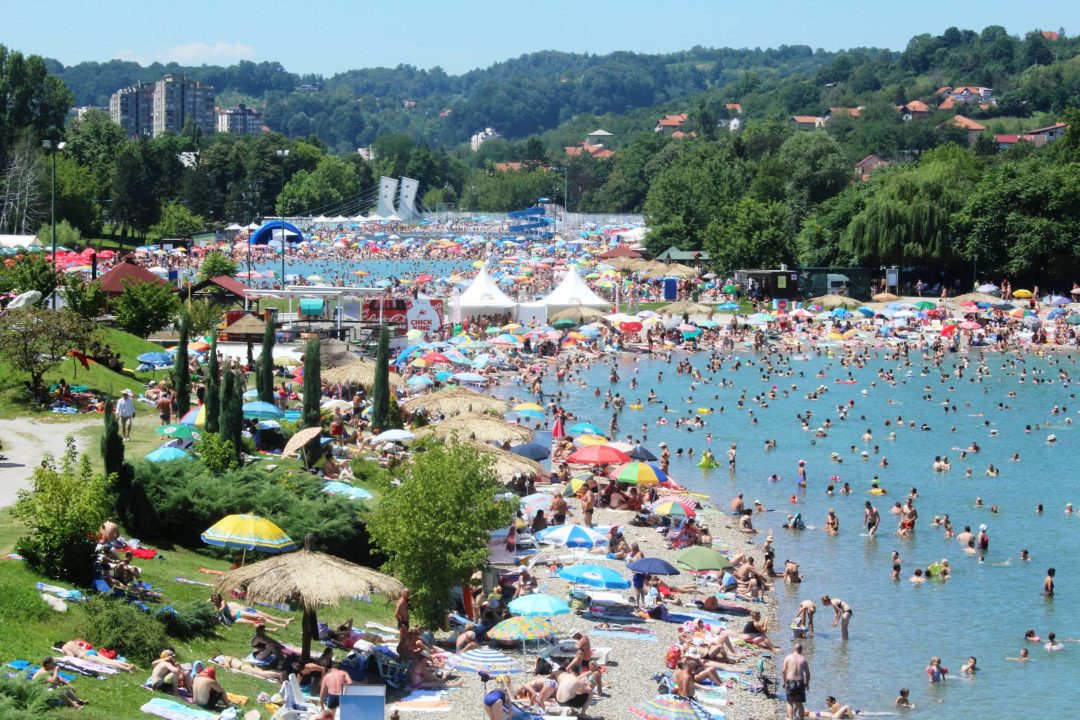
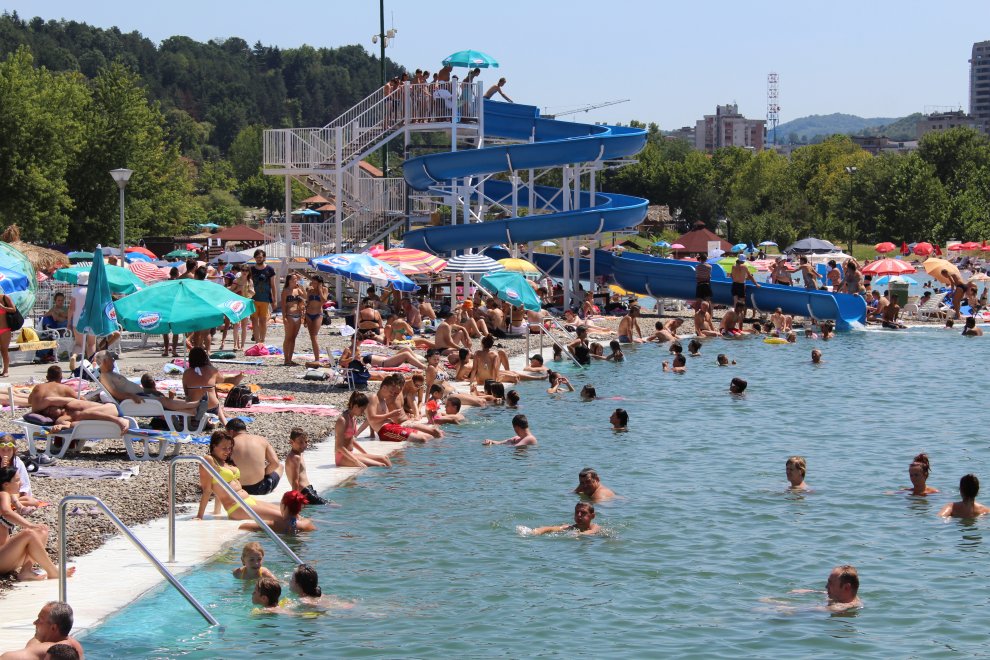
The work of the Pannonian Lakes complex in Tuzla so far provides optimistic forecasts for future development plans. The Pannonian Lakes complex has a total area of 75,000 m², a coastline of about 1,100 m, and a pebble beach area of 24,000 m². Since its construction in 2003, the complex has been visited by over 7 million guests , with an average daily visit of about 7,000 guests and a maximum daily visit of 15,000 guests. The record number of visits to the Pannonian Lakes complex was achieved in the summer season of 2024 with 534,000 guests . The record number of daily visits occurred on Wednesday, August 13, 2014, when 15,094 tickets were sold, which makes a visit of 16,500 guests, taking into account the arrivals of guests with seasonal, monthly and weekly tickets. The reasons for the large number of visits to the Pannonian Lakes complex are certainly the absolutely pure, healing salt water (for bone and respiratory diseases), the standards of guest accommodation and maintenance of the complex, which are higher than the Blue Flag standards for seas and lakes (especially in the segment of caring for the health and safety of guests), good entertainment and animation for guests, and the very low price of all services at the complex.
Salt lakes are artificial accumulations of water inside shells that are built from a combination of geosynthetic and natural materials (geotextiles, geogrids and geomembranes combined with sand, crushed stone and gravel).
The first lake has a water surface area of 1,014 ha (10,140 m²), a depth of 0.5-1.6 m, a shoreline length of approximately 420 m, a water volume of 13,000-15,000 m³ with a water surface elevation of 227.40 m.
The second lake has a water surface area of 0.530 ha (5,300 m²), a depth of 1.35-1.6 m, a water volume of 6,000-7,000 m³, and a shoreline length of approximately 320 m.
The third lake has an area of 1.7 ha, a water surface of 3,850 m 2 and a water volume of 5,600 m³, a lake depth of 0.80 m-1.80 m and a shoreline of approx. 360 m. The third Pannonian lake is designed in the form of two smaller and connected lakes with a spillway and a lot of adrenaline fun with two water slides , two hydro massagers (duck’s beak) and a water geyser .
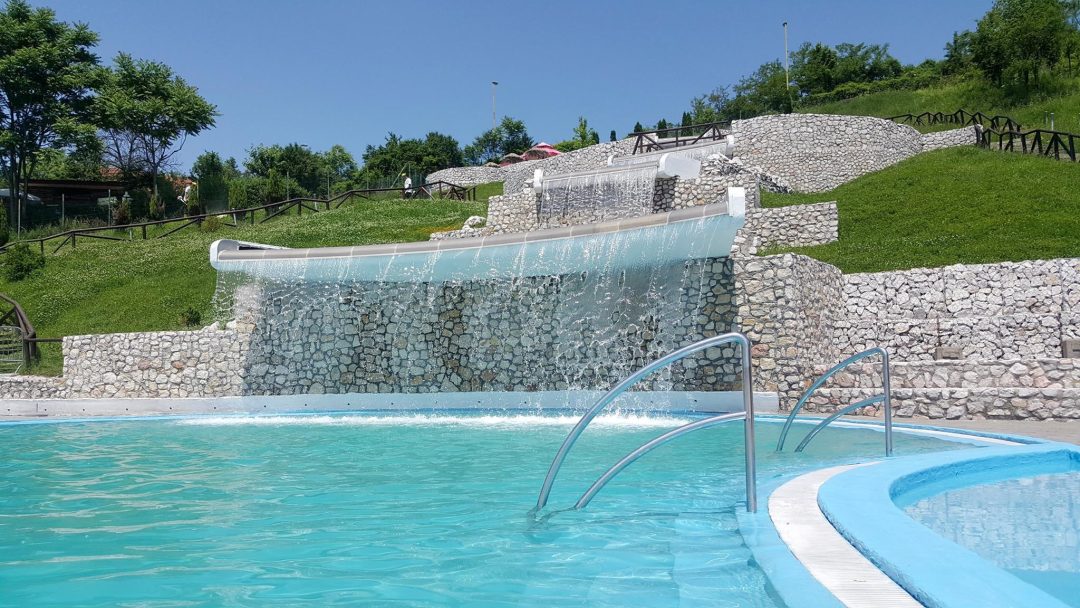
The salt waterfalls are a special attraction at the complex, with five water cascades and two swimming pools, where inhaling salt water vapor is very beneficial for stress relief, respiratory diseases, headaches, and general health improvement.
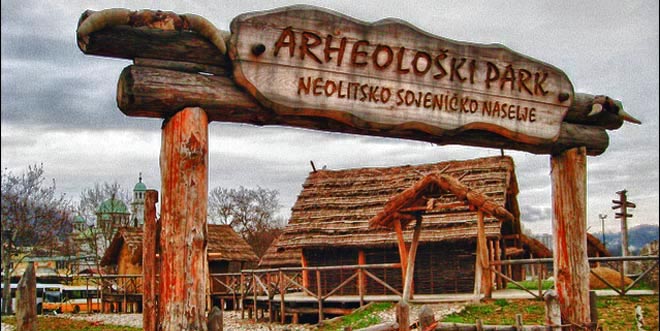
In the area of cultural tourism, the Pannonica complex houses the Archaeological Park-Neolithic Sojenica Settlement , a replica of a settlement from the Neolithic era with nine dwellings, a wooden platform and an internal display of tools, utensils and dishes for salt extraction, which testifies to thousands of years of continuity of life in the area of the city of Tuzla, and the Pannonica Geological Exhibition Museum , which presents guests with the spectacular geological past of the Tuzla area.
The specificity and uniqueness of the lake is the water with which it is filled and represents a combination of technological water (delivered by pipeline from the artificial reservoir of Lake Modrac) and high-concentration brine (300 mg/l) from salt wells from the Tetima pumping station. The share of salt water in the total water volume is 30% with a salinity of 30-35 gr/l. and which is always at the level of salinity of sea water. In addition to salinity, the water of the Pannonian lake also contains minerals (calcium, sodium, sulfur, iodine, bromine, etc.) and has justifiably acquired the image of “medicinal” water unique in our region and in Europe.
Given the “wealth” that we have in the water of the Pannonian Lake, special attention and care is taken to maintain (chemically and bacteriologically) the lake water through a specific technological process. The technological process takes place through 24-hour filtration of the total water volume of the lake (2.5 cycles) and its chemical treatment through a series of procedures such as maintaining the pH value, disinfection, destruction of algae, flocculation (removing water turbidity) and constant physical cleaning of the lake complex.
The most important segment of the technological process is water filtration, which is carried out with sand filters in three filter plants with 2.5 cycles per 24 hours for the total water volume, where the process is automated with a constant flow of fresh technological water and brine. Water disinfection, as the second most important process, is carried out with chlorine gas, where, depending on weather conditions and the number of guests, the chlorine concentration is maintained at a level of 0.2-0.4 mg/l. All measurements and analyses of lake water (three times a week during the swimming season) are carried out at the Institute of Public Health of the Canton of Tuzla, where all previous measurements have proven the absolute correctness and high quality of lake water during the swimming season.
Tourist visits of over 450,000 guests during the summer with a daily capacity of the complex of 15,000 guests, an increase in the number of guests from other parts of Bosnia and Herzegovina, neighboring and other European countries, speak in favor of the fact that the Panonika salt lake complex in Tuzla is ranked among the ten most important tourist destinations in Bosnia and Herzegovina and Southeast Europe with the brand of a bathing resort with medicinal salt water, a cheap, high-quality and safe place for rest, recreation and good fun.
The complex is open and decorated throughout the year for visits, walks and recreation of citizens. Inside the complex there is a modern outdoor fitness center on the location of the first Pannonian lake, a Street Workout Park on the third Pannonian lake, a mammoth chess on the first lake, and mapped walking/jogging trails around the entire complex. Next to the complex itself there is a children’s amusement park Slana Banja-Vrtić, which has devices for entertainment and play for children from three to twelve years old. In this unusual amusement park, which has about a kilometer of asphalt paths, various entertainment devices, slides, swings, carousels, seesaws, houses, a pirate ship, and a number of other play devices and benches for parents to rest.
JP ”Pannonica” doo Tuzla is also active during the winter period. We opened the first Panonika City Ice Rink in Tuzla and the Tuzla Canton in cooperation with the city of Tuzla in December 2006. Within the Panonika complex, there is a large ice rink measuring 660 m², with a capacity of over 100 skaters/session, a small ice rink measuring 60 m², which is located right next to the large one and is physically separated for the youngest and beginner skaters. The Panonika City Ice Rink is open from the end of November to the beginning of February, and thanks to the 800 m² covered rink, it operates independently of external weather conditions. In addition to daily skating sessions, the rink organizes various entertainment and animations, as well as a basic skating school, which was successfully completed by 350 participants during the 2024/2025 season, mostly preschool children. For the 16th skating season 2022/2023, the offer at the ice rink has been enriched by the construction of an attractive 30-meter-long “Ice Slide” installation for descending the ice track on specially designed air mattresses. The ice slide is a special attraction of the rink, and during the 17th and 18th skating seasons, 40,000 descents were made.
Other tourist locations in Tuzla In addition to the Pannonian Lakes complex as a recreational and health center, the city’s tourist offer has been enriched by the development of the Salt Square as a museum and tourist complex where salt was exploited during the Turkish rule, where the remains of the main salt well used during the Turkish rule have been protected and made available for viewing. The central place on the Salt Square is a fountain, a gift from the city of Ravenna, built in the form of a stylized Neolithic vessel for boiling salt, and decorated with mosaics by the Instituto d’arte Severini and the world-renowned mosaic master Felice Nittola . A special city attraction is the Freedom Square with the reconstructed Baroque building and a large fountain. On Thursday, September 29, 2022, in the center of Tuzla, the House of the Bosnian Language was opened, dedicated to the author of the oldest South Slavic dictionary of the Štokavian dialect in Europe, the Bosnian-Turkish Dictionary, which was published in 1631 by the Tuzla author Muhamed Hevai Uskufi.
The form of cultural tourism has been shaped and presented to the public through the possibility of visiting archaeological sites in Gornja Tuzla (Neolithic), at the Castle in Solina and Krešića Gradina in Gornje Par Selo (Late Bronze Age), to which are added tours of a large number of cultural and historical monuments in the Tuzla area (381 monuments have been recorded). All this rich tourist offer of the city of Tuzla and its surroundings is promoted by the work of the Tourist Board of the City of Tuzla and the Tuzla Canton.
The development of the tourist economy and complementary activities (trade, hotel, catering, souvenir making, development of small home-based businesses in the tourism segment, etc.) is part of the general planned development strategy of our city and region, and represents an overall broader goal to which the implementation of our project will contribute. The constant increase in the number of local guests and guests from all over our country and abroad each season, the development of new infrastructure and service facilities, responsible management of the Pannonian Lakes complex and the constant support of the wider community are key objective indicators related to the success of the implementation of the general goal of the project.
In the area of cultural tourism, the Pannonica complex houses the Archaeological Park-Neolithic Sojenica Settlement , a replica of a settlement from the Neolithic era with nine dwellings, a wooden platform and an internal display of tools, utensils and dishes for salt extraction, which testifies to thousands of years of continuity of life in the area of the city of Tuzla, and the Pannonica Geological Exhibition Museum , which presents guests with the spectacular geological past of the Tuzla area.
The specificity and uniqueness of the lake is the water with which it is filled and represents a combination of technological water (delivered by pipeline from the artificial reservoir of Lake Modrac) and high-concentration brine (300 mg/l) from salt wells from the Tetima pumping station. The share of salt water in the total water volume is 30% with a salinity of 30-35 gr/l. and which is always at the level of salinity of sea water. In addition to salinity, the water of the Pannonian lake also contains minerals (calcium, sodium, sulfur, iodine, bromine, etc.) and has justifiably acquired the image of “medicinal” water unique in our region and in Europe.
Given the “wealth” that we have in the water of the Pannonian Lake, special attention and care is taken to maintain (chemically and bacteriologically) the lake water through a specific technological process. The technological process takes place through 24-hour filtration of the total water volume of the lake (2.5 cycles) and its chemical treatment through a series of procedures such as maintaining the pH value, disinfection, destruction of algae, flocculation (removing water turbidity) and constant physical cleaning of the lake complex.
The most important segment of the technological process is water filtration, which is carried out with sand filters in three filter plants with 2.5 cycles per 24 hours for the total water volume, where the process is automated with a constant flow of fresh technological water and brine. Water disinfection, as the second most important process, is carried out with chlorine gas, where, depending on weather conditions and the number of guests, the chlorine concentration is maintained at a level of 0.2-0.4 mg/l. All measurements and analyses of lake water (three times a week during the swimming season) are carried out at the Institute of Public Health of the Canton of Tuzla, where all previous measurements have proven the absolute correctness and high quality of lake water during the swimming season.
Tourist visits of over 450,000 guests during the summer with a daily capacity of the complex of 15,000 guests, an increase in the number of guests from other parts of Bosnia and Herzegovina, neighboring and other European countries, speak in favor of the fact that the Panonika salt lake complex in Tuzla is ranked among the ten most important tourist destinations in Bosnia and Herzegovina and Southeast Europe with the brand of a bathing resort with medicinal salt water, a cheap, high-quality and safe place for rest, recreation and good fun.
The complex is open and decorated throughout the year for visits, walks and recreation of citizens. Inside the complex there is a modern outdoor fitness center on the location of the first Pannonian lake, a Street Workout Park on the third Pannonian lake, a mammoth chess on the first lake, and mapped walking/jogging trails around the entire complex. Next to the complex itself there is a children’s amusement park Slana Banja-Vrtić, which has devices for entertainment and play for children from three to twelve years old. In this unusual amusement park, which has about a kilometer of asphalt paths, various entertainment devices, slides, swings, carousels, seesaws, houses, a pirate ship, and a number of other play devices and benches for parents to rest.
JP ”Pannonica” doo Tuzla is also active during the winter period. We opened the first Panonika City Ice Rink in Tuzla and the Tuzla Canton in cooperation with the city of Tuzla in December 2006. Within the Panonika complex, there is a large ice rink measuring 660 m², with a capacity of over 100 skaters/session, a small ice rink measuring 60 m², which is located right next to the large one and is physically separated for the youngest and beginner skaters. The Panonika City Ice Rink is open from the end of November to the beginning of February, and thanks to the 800 m² covered rink, it operates independently of external weather conditions. In addition to daily skating sessions, the rink organizes various entertainment and animations, as well as a basic skating school, which was successfully completed by 350 participants during the 2024/2025 season, mostly preschool children. For the 16th skating season 2022/2023, the offer at the ice rink has been enriched by the construction of an attractive 30-meter-long “Ice Slide” installation for descending the ice track on specially designed air mattresses. The ice slide is a special attraction of the rink, and during the 17th and 18th skating seasons, 40,000 descents were made.
The form of cultural tourism has been shaped and presented to the public through the possibility of visiting archaeological sites in Gornja Tuzla (Neolithic), at the Castle in Solina and Krešića Gradina in Gornje Par Selo (Late Bronze Age), to which are added tours of a large number of cultural and historical monuments in the Tuzla area (381 monuments have been recorded). All this rich tourist offer of the city of Tuzla and its surroundings is promoted by the work of the Tourist Board of the City of Tuzla and the Tuzla Canton.
In addition to the complex of the Pannonian Lakes as a recreational and health center, the city’s tourist offer is enriched by the arrangement of Soni Square as a museum-tourist complex where salt was exploited during the Turkish rule, where the remains of the main soni well used during Turkish rule are protected and accessible for viewing, and the central place in Soni Square is the fountain, a gift from the city of Ravenna, built in the form of a stylized Neolithic vessel for boiling salt, and covered with a mosaic realized by the Instituto d’arte Severini and the world-renowned mosaic master Felice Nittola . A special city attraction is Freedom Square with a reconstructed Baroque building and a large fountain. On Thursday, September 29, 2022, in the center of Tuzla, the House of the Bosnian Language was opened, dedicated to the author of the oldest South Slavic dictionary of the Štokavian dialect in Europe, the Bosnian-Turkish dictionary, which was published in 1631 by Tuzlak author Muhamed Hevai Uskufi.
The development of the tourist economy and complementary activities (trade, hotel, catering, souvenir making, development of small home-based businesses in the tourism segment, etc.) is part of the general planned development strategy of our city and region, and represents an overall broader goal to which the implementation of our project will contribute. The constant increase in the number of local guests and guests from all over our country and abroad each season, the development of new infrastructure and service facilities, responsible management of the Pannonian Lakes complex and the constant support of the wider community are key objective indicators related to the success of the implementation of the general goal of the project.
Virtual map of the Pannonian Lakes and the city of Tuzla
In this virtual presentation you can find the city of Tuzla and the salty Pannonian Lakes with all their attractions.
WATER TEMPERATURE AND SALINITY
THIRD LAKE
Water temperature
24 °C
Salinity
30g/l
FIRST LAKE
Water temperature
24 °C
Salinity
30g/l
SECOND LAKE
Water temperature
24 °C
Salinity
30g/l
WATERFALLS
Water temperature
24 °C
Salinity
30g/l
THIRD LAKE
Water temperature
24 °C
Salinity
30g/l
FIRST LAKE
Water temperature
24 °C
Salinity
30g/l