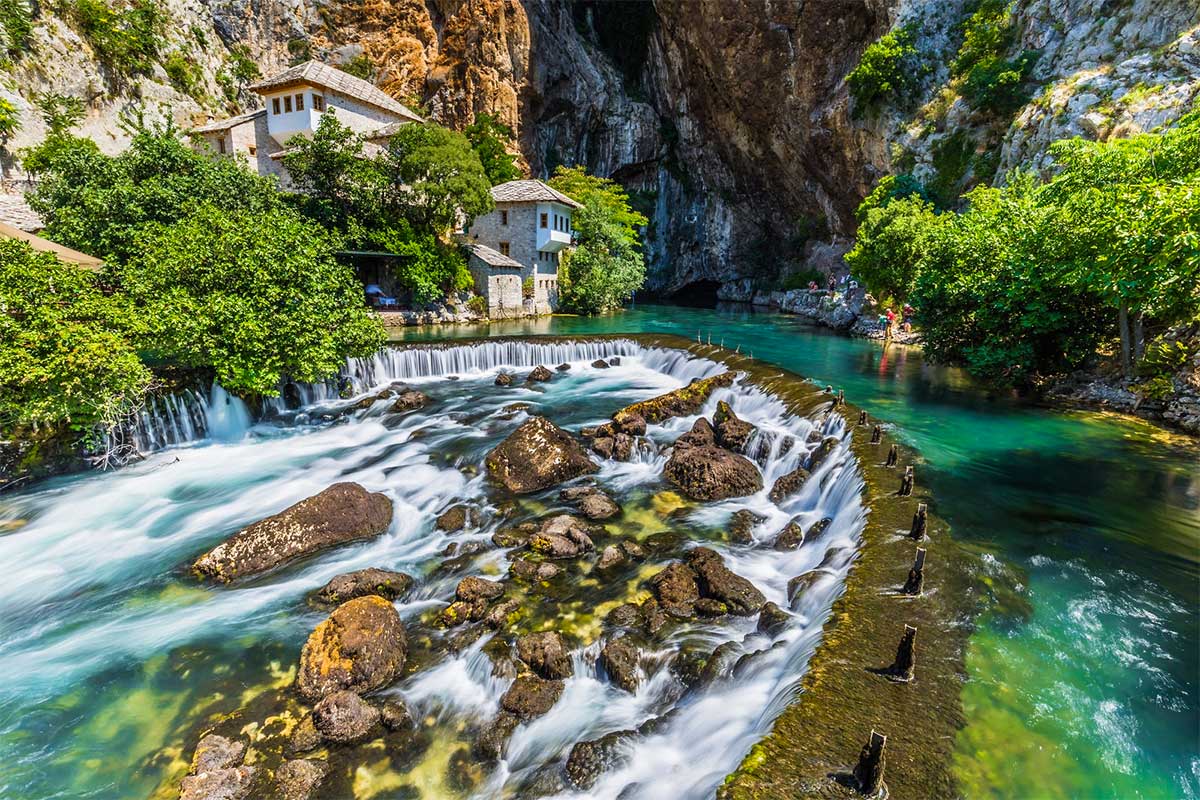
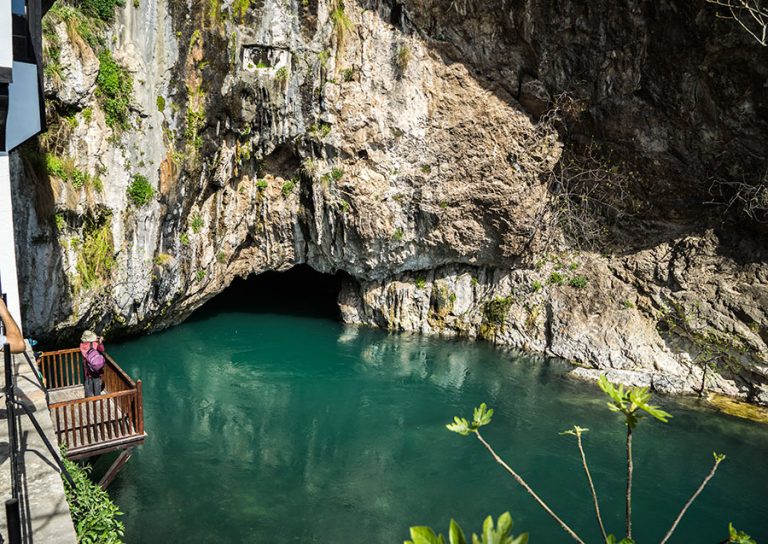
The Tekija was built on a solid rocky soil at the right side of the source of the Buna river, one of the biggest in Europe. A very high cliff stretches above the Tekija for some 240 meters. On top of that cliff lie the remains of Stjepan Vukcic-Kosaca’s fort-town dating back to the Middle Ages. The complex was damaged more than once because of rocks collapsing. The European nettle trees that grow from the cracks of the cliff above the Tekija significantly contribute to the frequency of the collapses. It is a well-known fact that the Tekija was rebulit after each of these unfortunate events, on multiple occasions such as: during the first half of the 17th century, in 1716.,1871.,1923., 1949., 1951., 1972. and 2011.