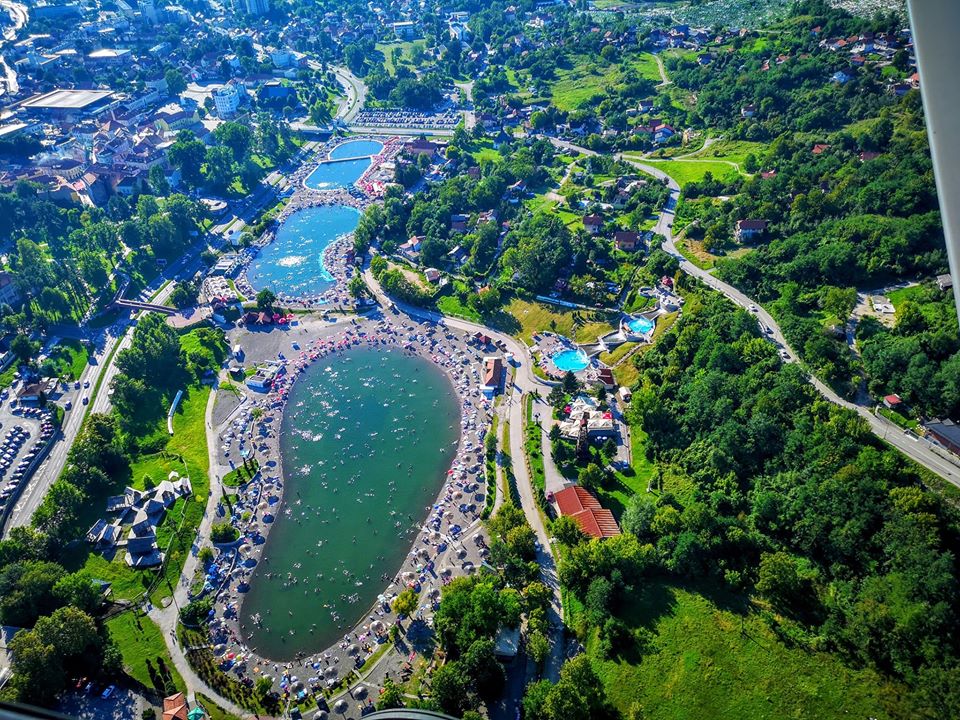
Tuzla has a specific geological past. The inhabitants of Tuzla say that Tuzla is “the city on a grain of salt”. That “grain of salt” are hundreds of millions of tons of rock salt and salt water left after the Pannonian Sea, which retreated from this area more than ten million years ago. The name of the City has always, through its existence and in languages of all travel writers, cartographers, historians and conquerors, been related to salt. River Jala, which flows through Tuzla, bears the name which originates from Greek word Jalos meaning salt. The City itself was called different names through its history: Castron de Salenes – the saline city (Greek), Salenes (Greek), Ad Salinas (Latin), Soli (South Slavic), Memlehatejn (Arabic), Memleha-i Zir (Persian), Tuz (Turkish)… until its present name Tuzla which means a saline in Turkish.
More organized exploitation of salt in Tuzla was intensified during the Ottoman rule. Salt production and its income were the key factor which established Tuzla as a town. Organized production and sale of salt was supported by a modernization of a salt well, located on contemporary Salt Square, in 1476 and by declaration of Tuzla for an “Emperor’s piece of land” in 1477. There were up to 80 pots on the Salt Square to boil salt water taken from the well.